

Sovereign Apertus Document Copilot
What the apertus document copilot ships

Next.js web copilot for staff
The default surface is a Next.js web application tied into your single sign-on, where staff chat with the apertus document copilot the same way they would with a hosted assistant. The model and the retrieval index stay sovereign behind the web layer, served from Swiss-resident hosting or on-prem.
Teams add-in delivery surface
For teams that already live in Microsoft Teams, we ship the same conversation as a Teams add-in. The add-in is a delivery channel built against the public Teams platform — not a Microsoft partnership or co-marketing claim — and it lets staff reach the apertus document copilot without leaving the workspace they already use every day.
Citation-back-to-source UX
Every answer renders with inline citations that link to the source paragraph, the source document and the source repository. A reviewer can click straight from the chat surface into the policy PDF, the wiki page or the contract clause that produced the answer. No paragraph, no citation, no answer — that is the rule the assistant follows.
Contract analysis workflow
Legal teams use the apertus document copilot to extract named clauses, compare contract versions against a reference template, surface non-standard language and produce a redline summary. The assistant carries the load that used to fall on a junior associate; a human reviewer keeps the final sign-off on what goes back to counterparty counsel.
Policy lookup for operations and HR
Operations, compliance and HR teams ask the copilot questions against the internal policy library and get answers grounded in the exact paragraph that applies. The retrieval pipeline runs on our Apertus RAG integration, so the answer the user reads can always be traced to the source on day one.
Session audit logs for compliance
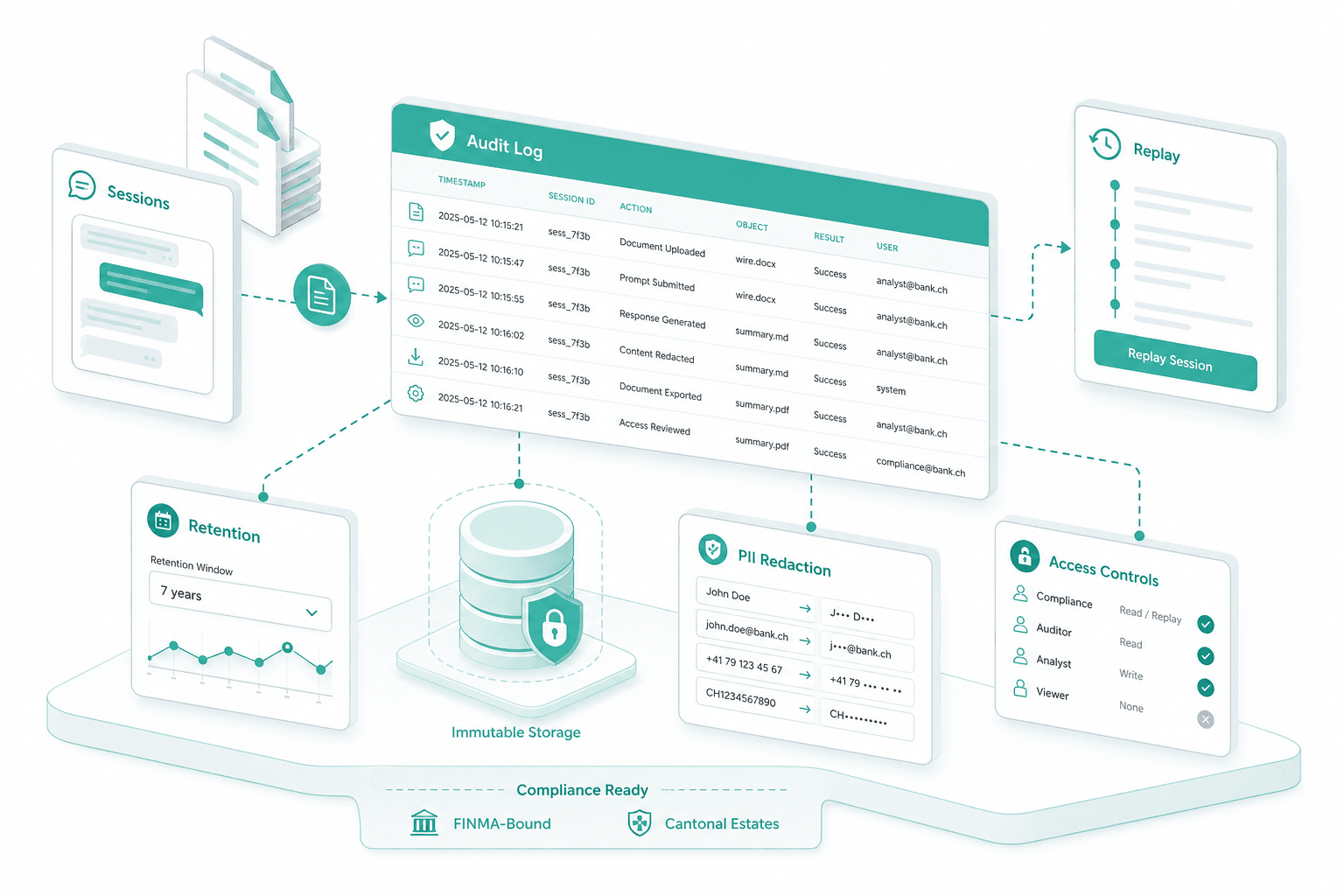
Each session writes a structured audit trail: prompt, retrieved passages, model output, citation set and user identity. Compliance can replay any conversation, trace which documents fed an answer and prove what the assistant did not see. Retention windows and redaction rules are configured per regulator and per workload.
How we ship the copilot
Scope the user workflows
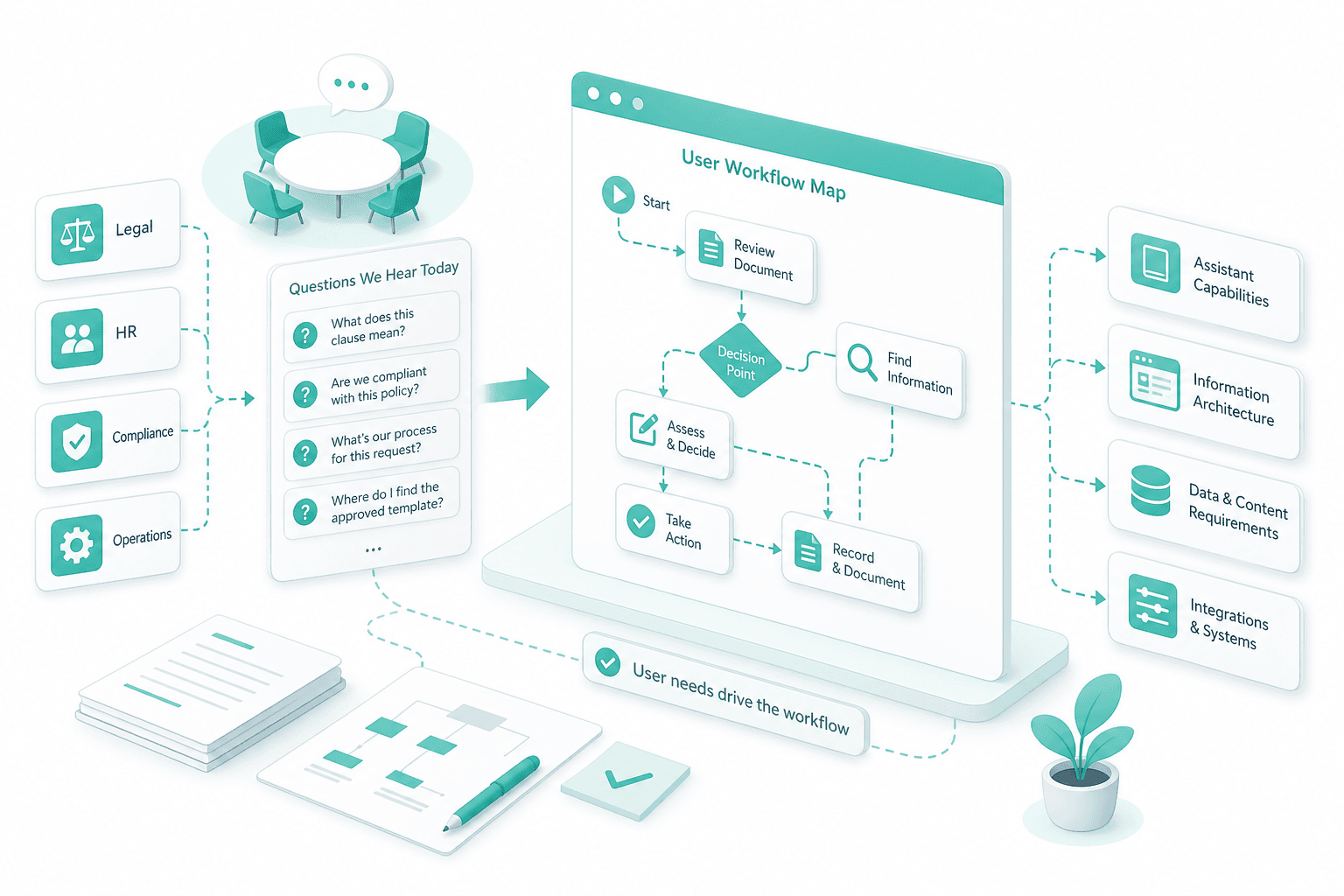
We sit with the people who will actually use the assistant — legal, HR, compliance, operations — and map the questions they ask today. Workflow maps drive everything downstream, not the other way around.
Map the document sources
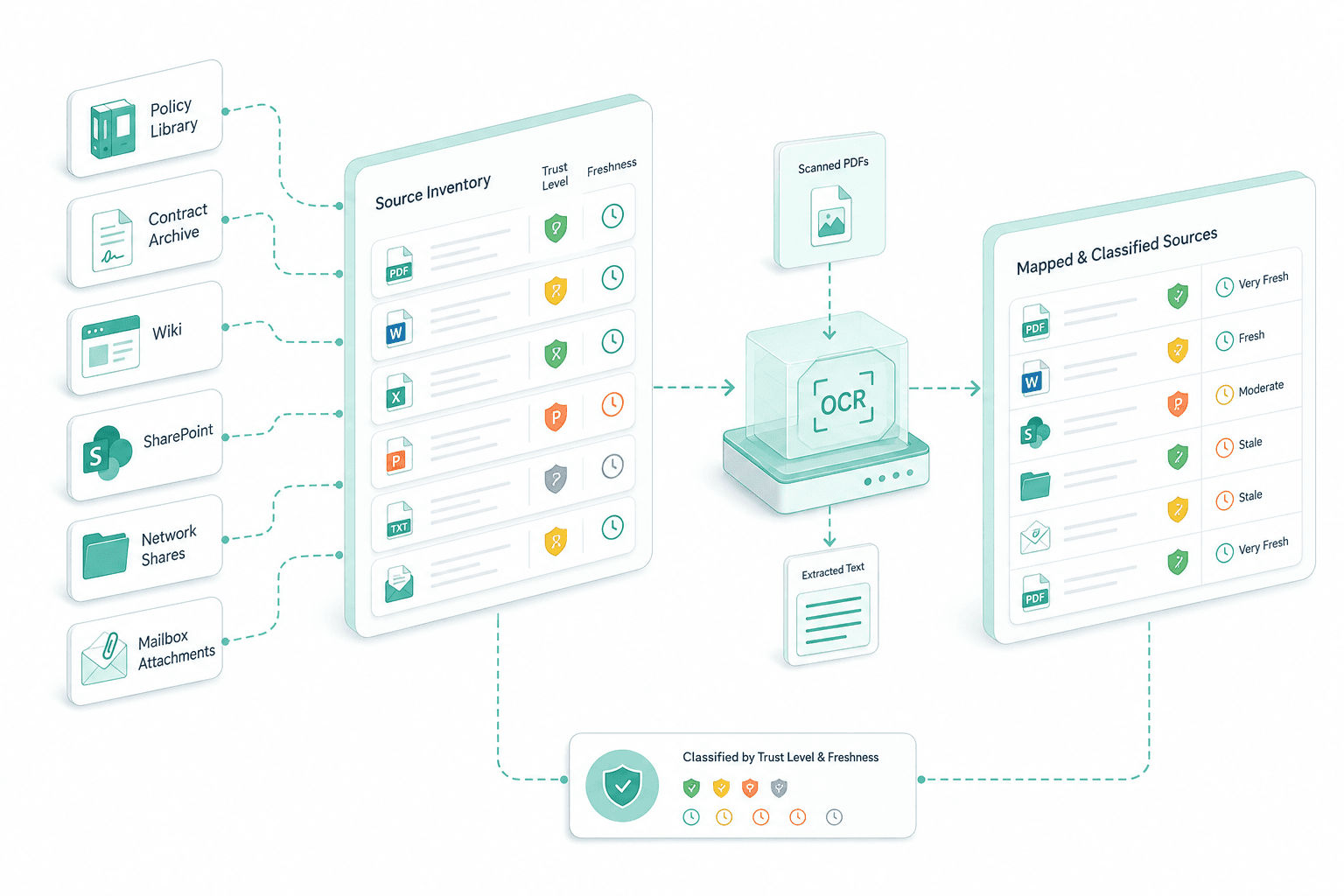
We inventory the policy library, contract archive, wiki, SharePoint, network shares and mailbox attachments. Sources are classified by trust level and freshness; mixed inputs route through our OCR layer for scanned PDFs.
Design the RAG stack
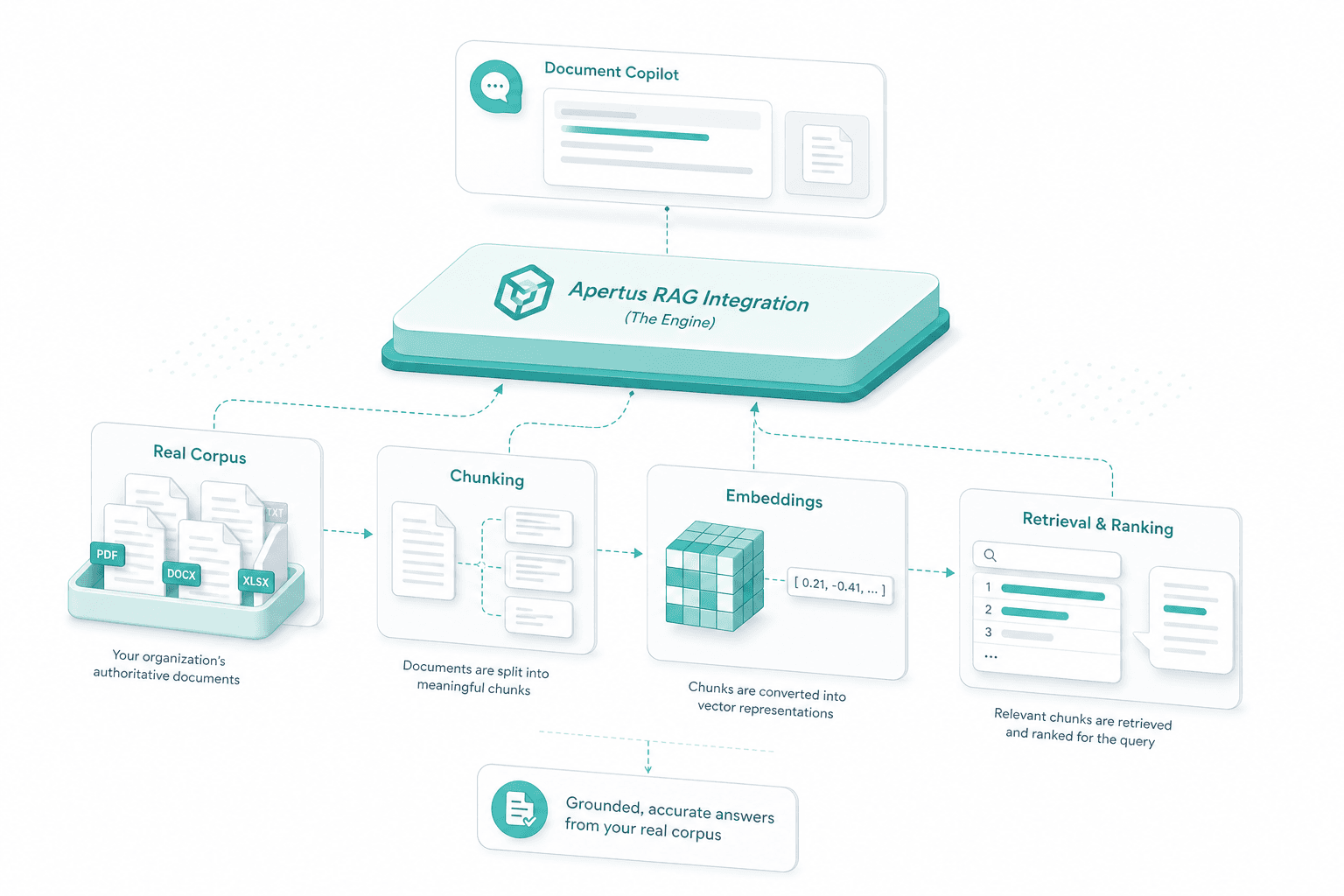
Retrieval, chunking, embeddings and ranking are designed against the real corpus, not a generic template. The backend uses our <a href="/en/services/apertus-swiss-llm/rag-integration">Apertus RAG integration</a> as the engine the copilot sits on.
Build the copilot UI
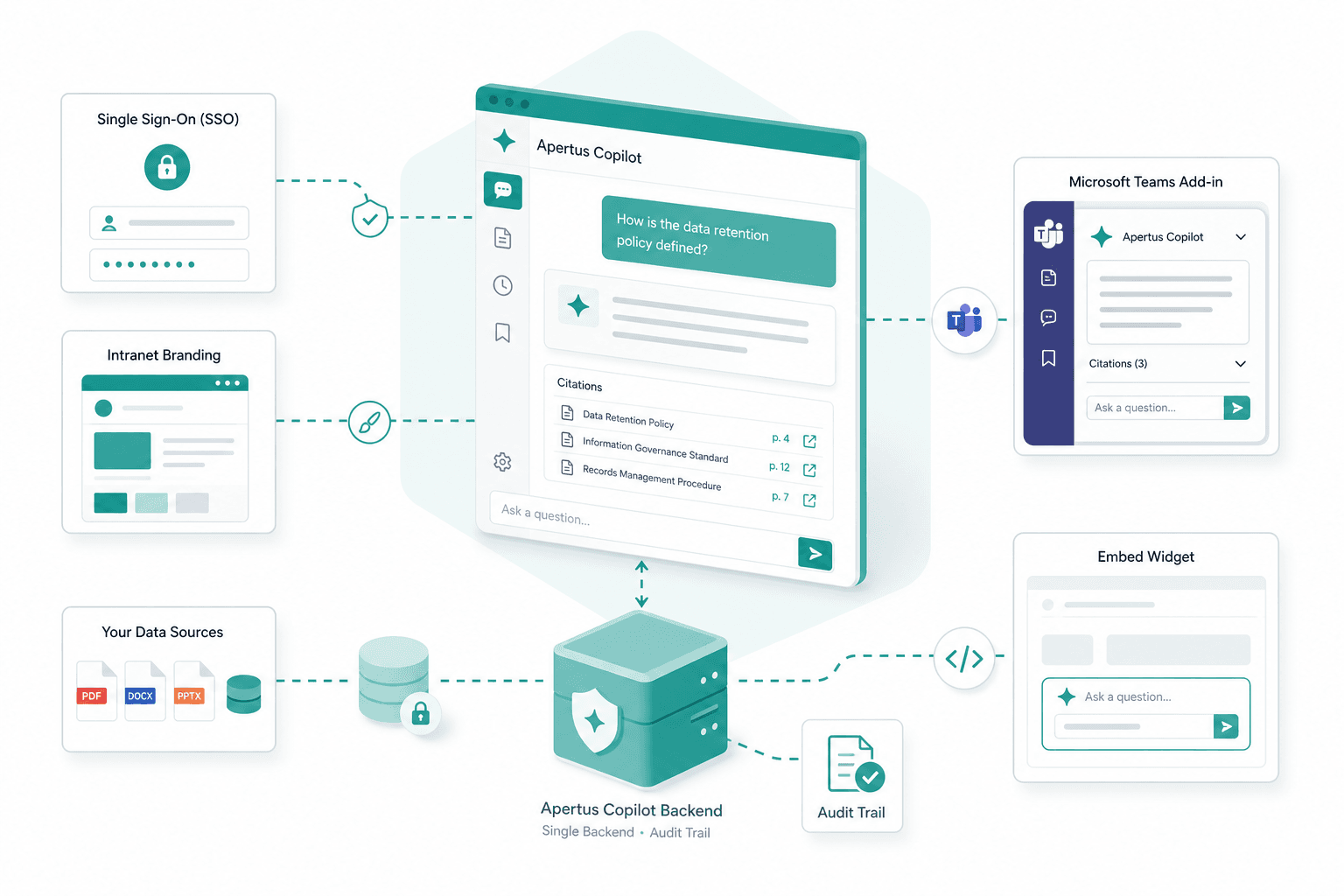
The Next.js application is built against your single sign-on, branded to fit the intranet, and shipped with the citation-back-to-source pattern wired in. Teams add-in and embed widget reuse the same backend and audit trail.
Wire audit and logging
Sessions write a structured audit log compliance can replay. We tune retention windows, PII redaction and access controls to whatever regulator the workload answers to, including FINMA-bound and cantonal estates.
Pilot and handover
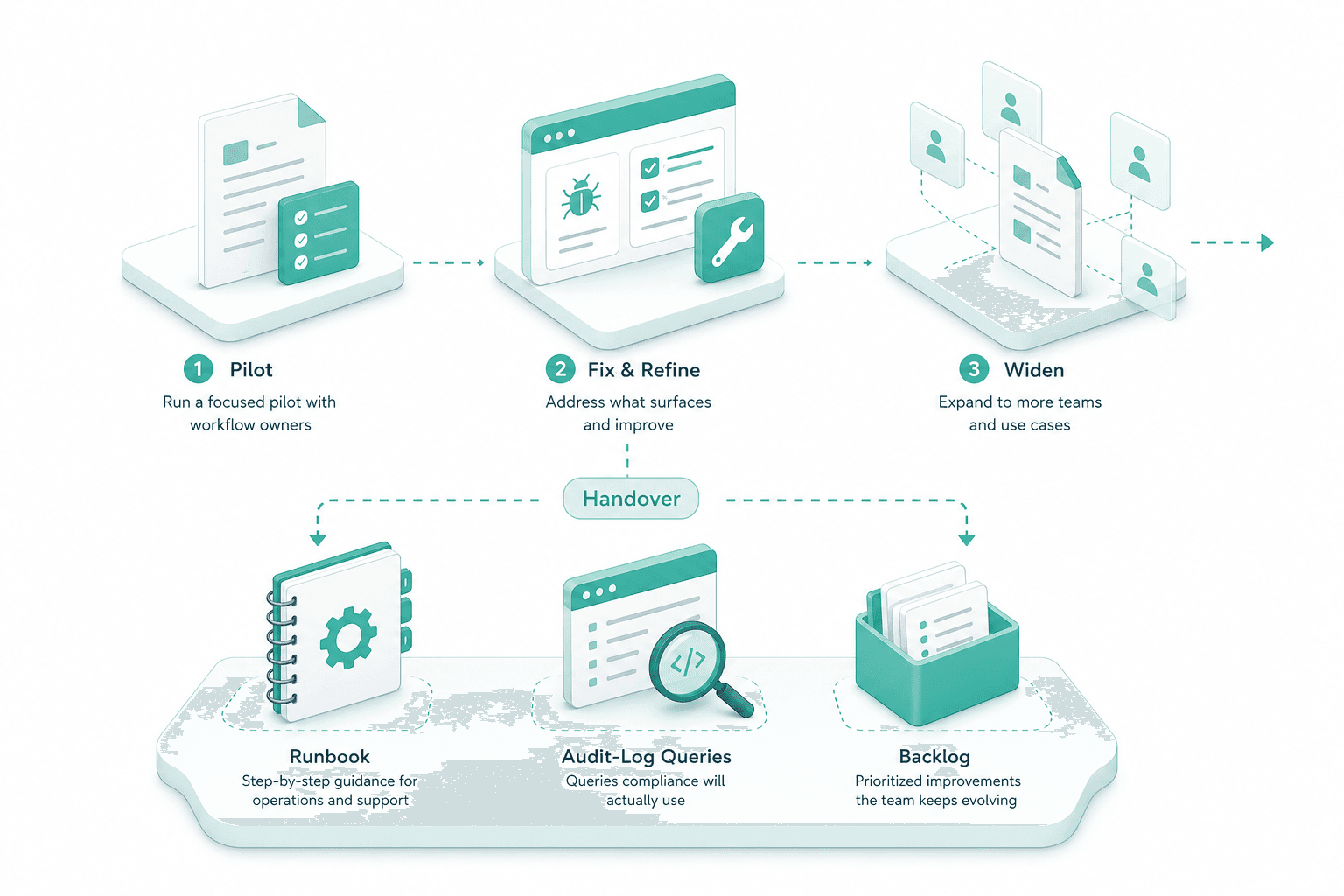
We run a small pilot with the workflow owners, fix what surfaces, then widen the population. Handover includes the runbook, the audit-log queries compliance will actually use, and a backlog the in-house team keeps evolving.
We sit with the people who will actually use the assistant — legal, HR, compliance, operations — and map the questions they ask today. Workflow maps drive everything downstream, not the other way around.
We inventory the policy library, contract archive, wiki, SharePoint, network shares and mailbox attachments. Sources are classified by trust level and freshness; mixed inputs route through our OCR layer for scanned PDFs.
Retrieval, chunking, embeddings and ranking are designed against the real corpus, not a generic template. The backend uses our <a href="/en/services/apertus-swiss-llm/rag-integration">Apertus RAG integration</a> as the engine the copilot sits on.
The Next.js application is built against your single sign-on, branded to fit the intranet, and shipped with the citation-back-to-source pattern wired in. Teams add-in and embed widget reuse the same backend and audit trail.
Sessions write a structured audit log compliance can replay. We tune retention windows, PII redaction and access controls to whatever regulator the workload answers to, including FINMA-bound and cantonal estates.
We run a small pilot with the workflow owners, fix what surfaces, then widen the population. Handover includes the runbook, the audit-log queries compliance will actually use, and a backlog the in-house team keeps evolving.
Selected engagements
BICOSY / BICO.CH
AI Shopping Assistant for bico.ch on WooCommerce

How SAPIENTROQ built BICOSY, an AI shopping assistant for the Swiss mattress retailer bico.ch — a NestJS backend with pgvector RAG, declared typed tools and a WordPress plugin that streams live WooCommerce events into the conversation.
View Case
SWISS INSURANCE POC
Insurance Document Automation POC for a Swiss Back Office
How SAPIENTROQ built a schema-driven insurance document automation POC for a Swiss back office: Mistral OCR plus OpenAI JSON-mode extraction, schemas generated live from admin-defined categories, with provider-swappable AI behind a single interface.
View Case
Why this copilot is built that way
Every answer cites its source paragraph
The author of this practice, Roland Kurmann, puts it plainly: A copilot lives or dies on citations. Every answer ours produces points to the source paragraph, the source document, and the source repository — so compliance can audit the assistant the same way they audit a person. The rule is enforced at the retrieval and rendering layer, not asked of the model as a guideline.
Session audit trail satisfies compliance review
The assistant is not a black box your auditors have to take on trust. Every session writes a structured trail — prompt, retrieved passages, model output, citation set, user identity — that compliance can replay end to end. That is how the apertus document copilot earns the right to sit between staff and regulated documents.
Sovereign alternative to Microsoft Copilot
For Swiss enterprises and public-sector bodies that cannot send corporate documents to a US hyperscaler, we frame this as a sovereign alternative — not a benchmark claim against Copilot for Microsoft 365. Apertus is the Swiss open-weights LLM; the model, the index and the audit log all live inside Switzerland on on-prem deployment or Swiss-resident hosting.
Plugs into the rest of the stack
The copilot reuses the retrieval pipeline from our Apertus RAG integration, and for clients with mixed inputs — scanned policies, supplier PDFs, contract images — we layer in our AI document automation OCR engine ahead of retrieval. Engagements start through AI consulting, the discovery front door for the Apertus Swiss LLM hub.
Frequently Asked Questions
Most teams meet it as a Next.js web application — a chat surface tied into single sign-on. We also ship an embedded widget for an existing intranet, and a Teams add-in that opens the same conversation inside Microsoft Teams. The model stays sovereign.
Contracts are ingested, segmented into clauses and indexed against your corpus. The copilot extracts named clauses, compares versions against a reference template, flags non-standard language and produces a redline. A legal reviewer keeps the final say.
Every answer renders with inline citations that link to the source paragraph, the source document and the source repository. A reviewer can click through from the chat surface to the exact line in the policy PDF or wiki page. No paragraph, no citation.
The default is a single Next.js application backed by Apertus served via vLLM, PostgreSQL with pgvector for retrieval, Redis and BullMQ for queueing. The same backend powers an embed widget and a Teams add-in. One model, one index, three surfaces.
Each session writes a structured audit trail: prompt, retrieved passages, model output, citation set and user identity. Compliance can replay any conversation and trace which documents fed an answer. Retention and redaction rules are set per regulator.
This is a sovereign alternative for teams that cannot send corporate documents to a US hyperscaler. Apertus runs inside Switzerland on Swiss-resident hosting or on-prem, the index lives in your estate, and citations make every answer auditable.
About SAPIENTROQ


Interested in a solution?
We are glad to show you various options without any obligation.

Roland Kurmann
CEO, SAPIENTROQ

